What Each Material Actually Is
Before you weigh heat resistance or price, it helps to know what you are actually looking at. These three materials get lumped together on showroom floors, but they are made in very different ways, and that difference drives how each one behaves in your kitchen.
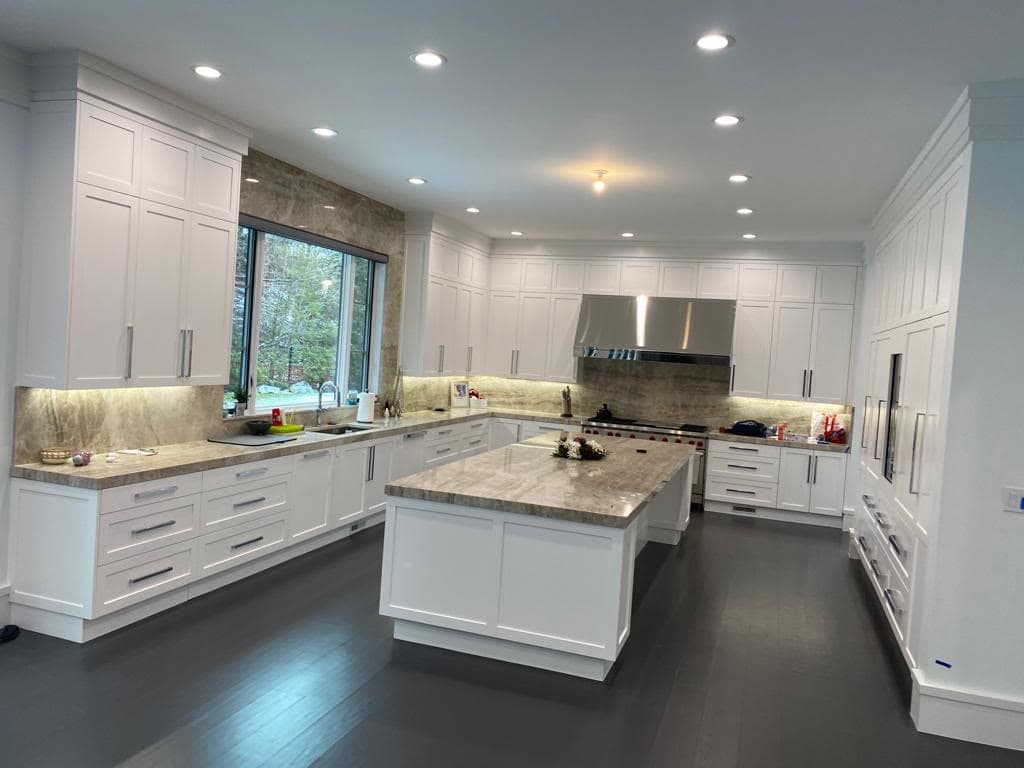
Granite is a 100 percent natural igneous stone. It formed underground over a very long time as molten rock cooled and crystallized, which is why every slab has its own speckled, grainy pattern of quartz, feldspar, and mica. No two granite slabs are identical.
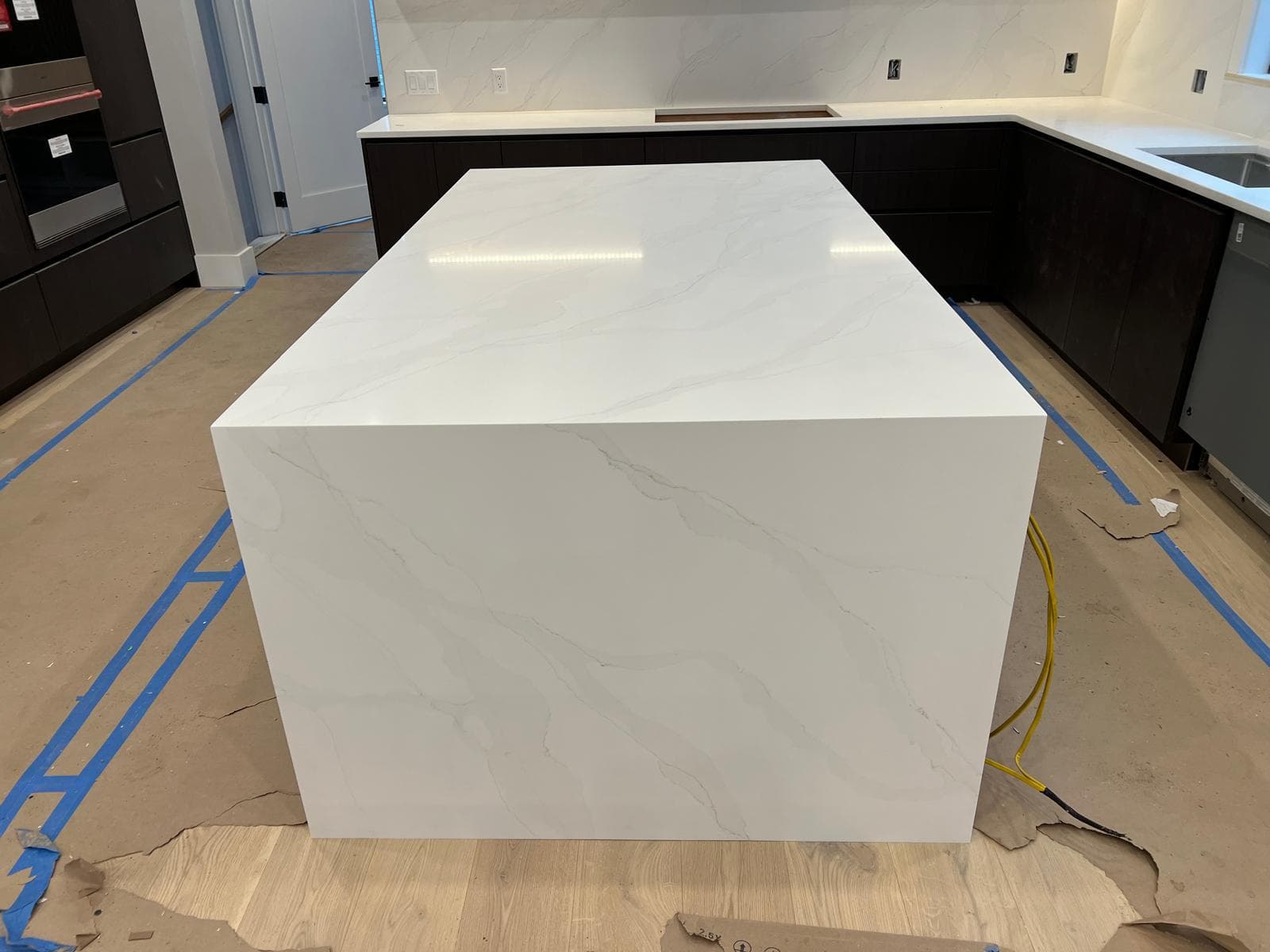
Quartz is an engineered stone. It is roughly 90 to 93 percent ground natural quartz mixed with resins and pigments, then pressed and cured into slabs. Because it is manufactured, the color and pattern are consistent from one end of the slab to the other, which is why brands like Cambria (made here in the US) and Caesarstone are popular for a clean, predictable look.
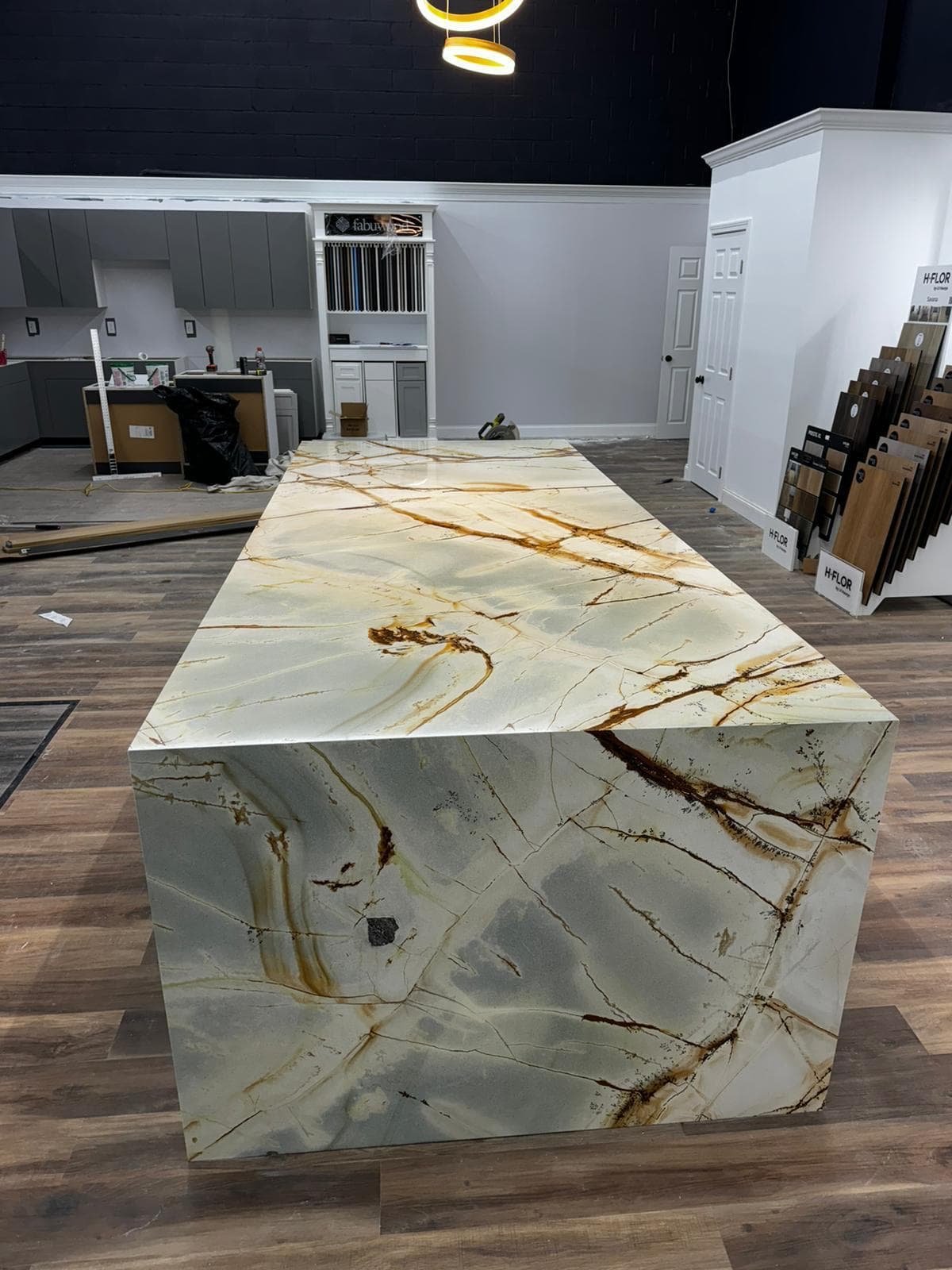
Quartzite is a natural metamorphic stone. It starts as sandstone and, under heat and pressure over time, hardens into a dense stone that is usually harder than granite. It often looks like marble, with soft veining and light tones, which is exactly why people confuse the two. It is not the same as quartz, despite the similar name.
For context, two other stones come up a lot in New England kitchens. Marble is a softer natural stone prized for its classic veined look, but it etches and stains more easily. Soapstone is a dense, matte natural stone with a warm, old-farmhouse feel that is very forgiving with heat but scratches more readily and darkens over time.
Heat, Scratches, and Etching: How They Hold Up
This is where the honest trade-offs live, and where a lot of homeowners are surprised.
Granite and quartzite are both natural stone, so they handle heat very well. You can set a hot pan down without damaging the surface, though using a trivet is still smart to protect any sealer. Both are also very hard and highly scratch resistant.
Quartz is the one people misunderstand. Because it contains resin, it is not heat proof. A pan straight off a 500 degree burner can scorch or discolor it, and that damage does not come out. Quartz is excellent against scratches and does not need sealing, but you have to be disciplined about trivets and hot pads.
Etching matters too. Marble and, to a lesser degree, some quartzites can etch when acidic things like lemon juice, wine, or tomato sauce sit on them, leaving a dull spot. Granite and quartz shrug this off almost entirely.
- Best with heat: granite, quartzite, soapstone (all natural stone)
- Weak with heat: quartz (resin can scorch), so always use a trivet
- Most scratch resistant: quartzite and quartz
- Most likely to etch from acids: marble, then some quartzites
Maintenance and Sealing: The Long-Term Reality
How much upkeep you want is often the deciding factor.
Quartz is the low-maintenance champion. Because it is non-porous and does not need sealing, day-to-day care is just soap and water. That is a big reason it wins in busy households.
Granite and quartzite are porous natural stones, so they typically get sealed. A good seal usually lasts a year or so, and resealing is a simple job you can often do yourself in a few minutes. If you like the idea of natural stone but want to know exactly what it needs, we walk you through the care for your specific slab at your free estimate.
Soapstone takes a different path: instead of sealing, many owners rub it with mineral oil to even out its patina. It is low fuss but does develop character over time, which some people love and others do not.
Look and Veining: Matching the Stone to the Kitchen
Appearance is personal, but the three materials tend to pull in different directions.
Granite gives you that natural, speckled, movement-rich look with real depth and mineral flecks. If you want a surface that reads clearly as genuine stone with warmth and variation, granite delivers.
Quartz gives you consistency and control. If you want a bright, uniform white or a subtle marble-inspired vein without surprises, quartz is predictable across the whole run, which is helpful for large islands where you do not want a distracting seam of natural variation.
Quartzite is often the showstopper. It brings the flowing, marble-like veining that homeowners love for a statement island, but with the hardness of natural stone. If you are drawn to the look of marble but want something tougher, this is usually the stone people fall for in person.
Price Positioning: What to Expect
Pricing swings with the specific color, thickness, edge profile, and how rare a slab is, so treat these as general market positioning rather than a quote.
Granite tends to be the most budget-friendly of the three at the entry level, with plenty of mid-range and premium options as the color and pattern get rarer. Quartz usually sits in the middle to upper-middle range, and the price is fairly steady because it is manufactured. Quartzite is generally the premium of the group, because it is a natural stone that is harder to quarry and fabricate, and the most dramatic slabs command more.
One honest note: the cheapest option is not always the best value. A slab that fits how you actually cook and clean will make you happier for the next 15 or 20 years than saving a little up front. We can give you a real number for your kitchen at a free in-home estimate.
Which One Fits Your Household?
Here is the quick way to think about it based on how you live.
For a busy family kitchen with kids, spills, and a lot of daily use, quartz is often the easiest choice: no sealing, extremely durable, and simple to wipe down, as long as everyone respects the trivet rule. Granite is a close second and adds heat tolerance for cooks who move fast.
For a statement island where the countertop is the centerpiece, quartzite is hard to beat: marble-like drama with real toughness. Granite with a bold pattern is a strong, more affordable alternative.
For the lowest-maintenance kitchen overall, quartz again leads, with soapstone as a characterful natural option if you like a matte, lived-in look and do not mind a little patina.
The best way to decide is to see full slabs in person, because a small sample chip never shows the real movement and color. Come look at slabs and let us measure your space with a free in-home estimate. Call Havenstone Granite at (774) 823-0961 and we will help you match the right stone to how you actually live in Worcester and across New England.