What an Edge Profile Is and Why It Matters
An edge profile is the shape cut and polished into the exposed front edge of your countertop, the part your hand rests on and the part everyone sees at eye level. It is one of the last decisions in a countertop project, but it changes both the personality of the kitchen and the final price.
A profile does three jobs at once. It sets the visual tone, from crisp and modern to soft and traditional. It affects how the edge holds up to daily knocks and how easy it is to wipe clean. And it can change your quote, because more complex shapes take more machine passes and hand polishing.
At Havenstone Granite in Worcester, we fabricate in-house, so we shape every edge on our own equipment. That means we can show you real samples in your chosen material before we commit a slab, and match the profile to how you actually use the kitchen.
The Common Edge Profiles, Walked Through
Here are the profiles homeowners in Massachusetts ask about most, from simplest to most decorative.
- Eased (square): A near-flat top with the sharp corners barely softened so they do not chip. Clean, current, and the default on most quartz. Almost always the least expensive.
- Beveled: A flat 45-degree cut across the top edge, usually 1/4 inch or 1/2 inch. Reads crisp and slightly architectural, works in both modern and transitional kitchens.
- Bullnose and half-bullnose: Bullnose rounds the edge into a full half-circle, soft and family-friendly with no sharp line. Half-bullnose rounds only the top, keeping a flat bottom for a slightly more defined look.
- Ogee: An S-shaped curve, concave over convex. The classic traditional and formal profile, common with granite and marble in more ornate kitchens.
- Dupont: A straight drop then a rounded return at the bottom. A dressier step up from eased without going full ogee.
- Mitered (built-up thick edge): Two pieces of stone joined at the front so the edge looks 2 to 4 inches thick without a full slab that heavy. A strong modern and high-end statement.
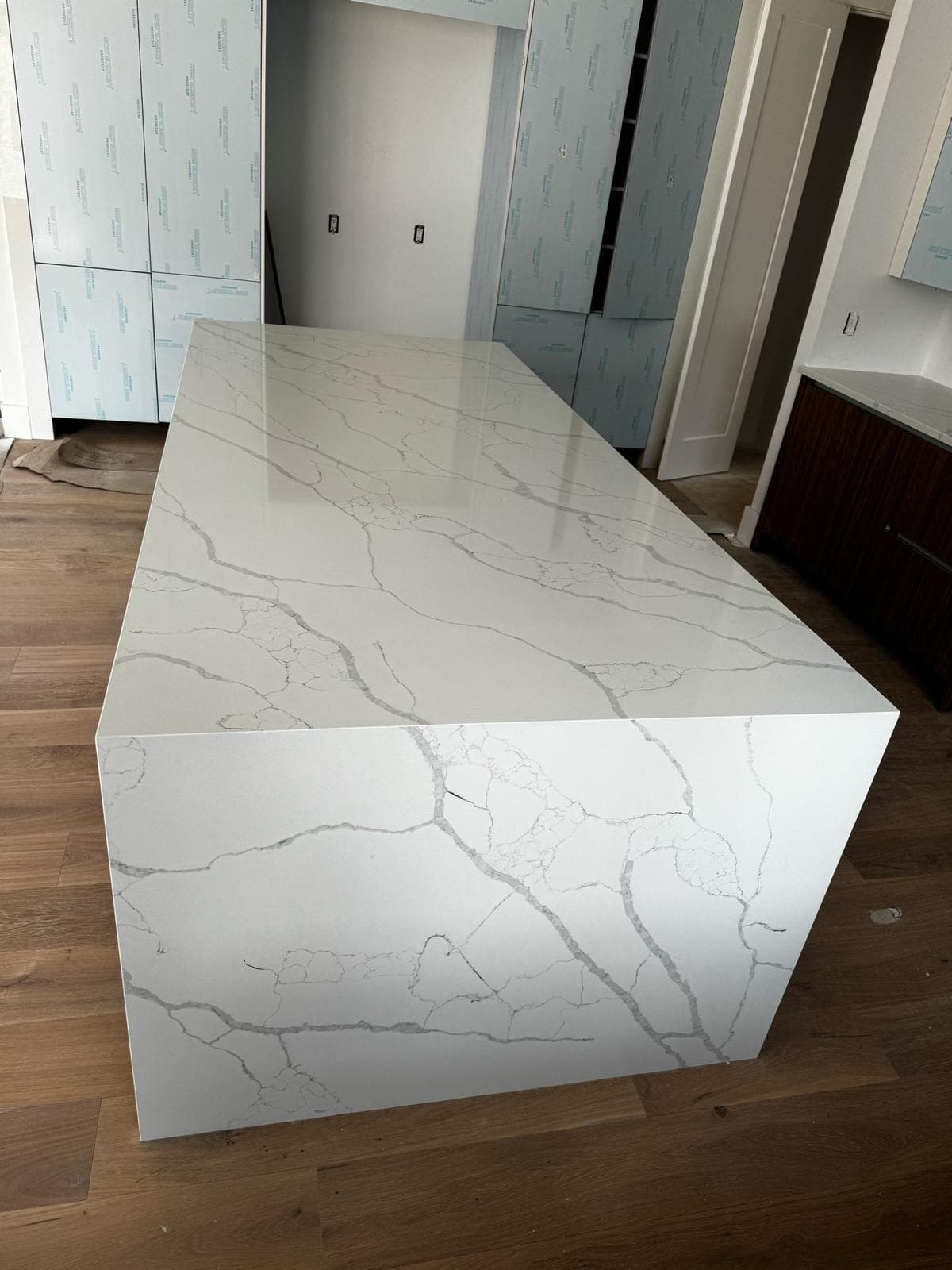
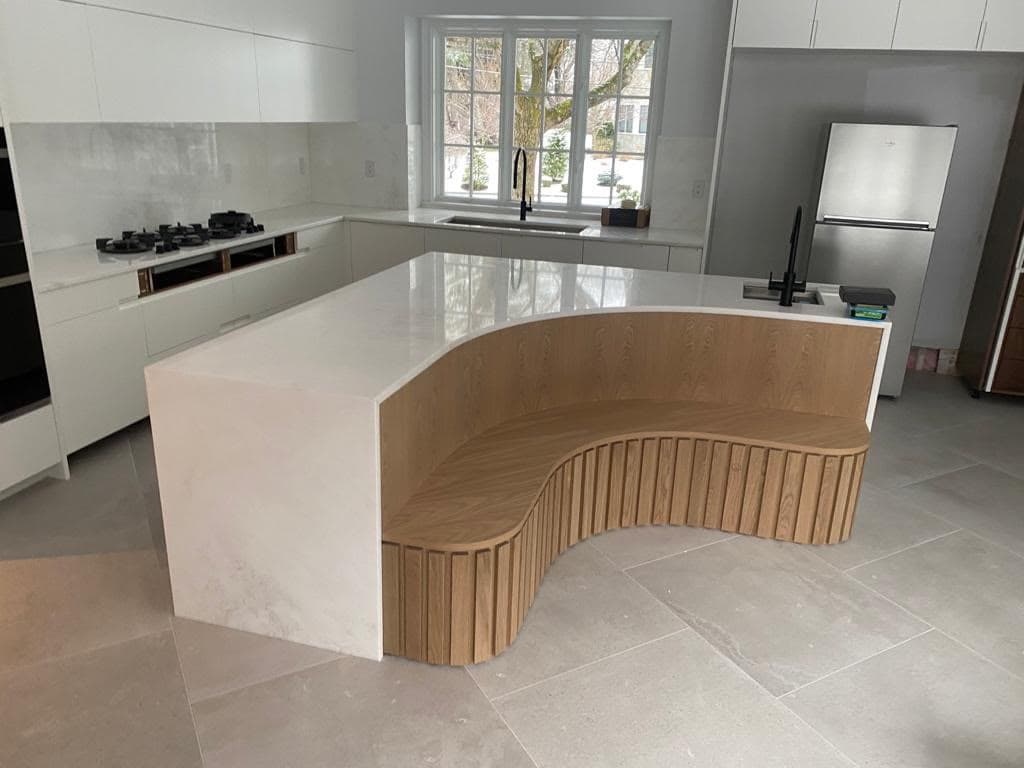
- Waterfall: The slab turns 90 degrees and runs down the side of an island or cabinet to the floor. A bold contemporary look most often seen on islands.
Which Profile Suits Modern vs Traditional Kitchens
If your kitchen leans modern, minimal, or transitional, straight lines usually win. Eased and beveled edges keep the focus on the stone and the cabinetry. For a stronger contemporary statement, a mitered thick edge or a waterfall island reads intentional and custom.
If your style is traditional, farmhouse, or formal, softer and more sculpted shapes tend to fit better. Ogee and dupont profiles pair naturally with raised-panel cabinets, ornate hardware, and stones like granite and marble.
Bullnose and half-bullnose sit comfortably in the middle. They suit busy family kitchens because there is no crisp corner to catch a hip or a dish, and they work with almost any cabinet style.
What Is Usually Included vs an Upcharge
On most projects, the simpler profiles are built into the base price and the more decorative ones cost extra, because they need additional shaping and polishing passes.
This varies by fabricator and by the stone itself, so treat the list below as a general pattern rather than a fixed rule. Our installed pricing generally runs from about $40 to $140 per square foot depending on material, thickness, and edge, and we confirm your exact edge cost in writing before any cutting begins.
- Usually included or lowest cost: eased (square), and often a standard beveled or half-bullnose.
- Usually a modest upcharge: full bullnose, dupont, ogee, and other multi-radius shapes.
- Usually the largest upcharge: mitered built-up edges and waterfall panels, since they use extra material and precise seam work.
Durability, Chipping, and Cleaning
Rounded profiles like bullnose and half-bullnose are the most forgiving day to day. With no sharp corner, they resist the small chips that can happen when a heavy pot catches an edge, which is one reason they are popular in homes with kids.
Sharper profiles like eased and beveled look tailored but leave a defined corner. In hard stones this holds up well with normal use, though a direct hard impact can still nick any edge. Detailed profiles like ogee have curved grooves that look beautiful but need a quick pass with a cloth to keep crumbs and film out of the recess.
For everyday care, warm water and mild soap handle every profile. Skip abrasive pads that can dull a polished edge, and on natural stone like granite or marble, keep up with sealing on the schedule we recommend at install.
How Thickness Plays In, and How to Choose
Slab thickness shapes which edges are even possible. Quartz and stone commonly come in 2cm (about 3/4 inch) and 3cm (about 1 1/4 inch). A 3cm slab has enough material for a full bullnose, ogee, or a substantial eased edge with no added buildup, and many homeowners prefer its solid, modern presence.
A 2cm slab is thinner, so to get a chunky look it is often mitered into a built-up edge, which adds cost but delivers a thick, high-end front. If you want a 2 inch or thicker edge on any material, plan on a mitered build-up.
To choose, start with your kitchen style, then your household. Modern and low-maintenance points you toward eased or a mitered thick edge. Traditional points toward ogee or dupont. A busy family kitchen favors a rounded, chip-resistant profile. The easiest way to decide is to hold the samples against your cabinets and counters in your own light. Call Havenstone Granite at (774) 823-0961 for a free in-home estimate, and we will bring profile samples and give you a firm, itemized price before anything is cut.