Start With How You Actually Cook and Live
The best countertop is not the prettiest one online. It is the one that fits how your kitchen gets used every day. Before you fall for a color, be honest about your household. That single answer narrows the field faster than anything else.
Ask yourself which of these sounds most like you. A busy family kitchen with kids, homework, and heavy daily meals needs a surface that shrugs off spills and does not demand babysitting. A serious home cook wants heat and stain resistance near the range. A statement kitchen built for entertaining can lean into dramatic veining and rare stone, as long as you accept a little more care.
- Busy family, low fuss: quartz or granite are forgiving and hard to hurt.
- Avid cook, lots of heat: granite and quartzite take hot pans better than most.
- Statement or entertaining kitchen: marble and exotic quartzite deliver drama, with more upkeep.
- Rental or resale flip: mid-range granite or quartz reads as an upgrade to buyers.
Match the Stone to Your Maintenance Tolerance
Countertops split into two camps: surfaces that need periodic sealing and surfaces that need none. Be honest about whether you will actually reseal a stone on schedule, because a beautiful slab neglected for years will not perform the way it should.
Quartz is engineered and non-porous, so it never needs sealing and resists stains with almost no effort. Natural stones like granite, marble, and quartzite are porous and usually want sealing, often once a year or so depending on the stone and use, to guard against stains from wine, oil, and citrus. Soapstone is a different animal: it does not need a chemical sealer, but many owners rub it with mineral oil to even out the patina it naturally develops.
If the idea of any maintenance stresses you out, quartz is the easy answer. If you enjoy the character natural stone earns over time and do not mind light upkeep, granite and quartzite reward you with a look engineered stone cannot fully copy.
Weigh Heat, Scratch, and Everyday Durability
Different stones handle heat and blades differently, and this matters most right around your cooktop and prep zone. Knowing the trade-offs upfront prevents an expensive surprise later.
Granite and quartzite are very hard and handle hot cookware well, though using a trivet is always smart. Quartz is extremely durable and scratch resistant, but its resin binder can be damaged by direct high heat, so hot pots should never sit straight on it. Marble is softer, etches from acids like lemon and vinegar, and scratches more easily, which is why it suits bakers and statement islands more than a heavy-use main run. Soapstone is soft enough to scratch but nicks buff out, and it is naturally heat resistant and non-porous.
- Most heat tolerant near the range: granite, quartzite, soapstone.
- Most scratch and stain resistant overall: quartz.
- Softest and most acid-sensitive: marble.
- Always use cutting boards and trivets, no matter the stone.
Set a Realistic Budget as a Range
Countertop pricing depends on the material, the rarity of the slab, the color, edge details, and how much fabrication your layout needs. Rather than chasing one exact number, plan around a range and let the fabricator refine it after measuring.
Installed countertop pricing commonly lands somewhere in the range of roughly $40 to $140 per square foot, with entry-level granite and quartz at the lower end and exotic quartzite or premium marble reaching the higher end. Your final number moves with slab selection, edge profile, cutouts for sinks and cooktops, and any seam work.
A smart move is to pick two or three stones you like across different price tiers, then get a measured quote for each. Often a mid-tier stone gives you most of the look you love without the top-tier cost. A free in-home estimate is the cleanest way to turn a rough range into a real number for your kitchen.
Nail the Look: Color, Cabinets, Floors, Edges, and Thickness
Once function is handled, focus on how the stone reads in your actual room. The countertop touches your cabinets, backsplash, and floor, so it has to work with all three, not just look good on its own.
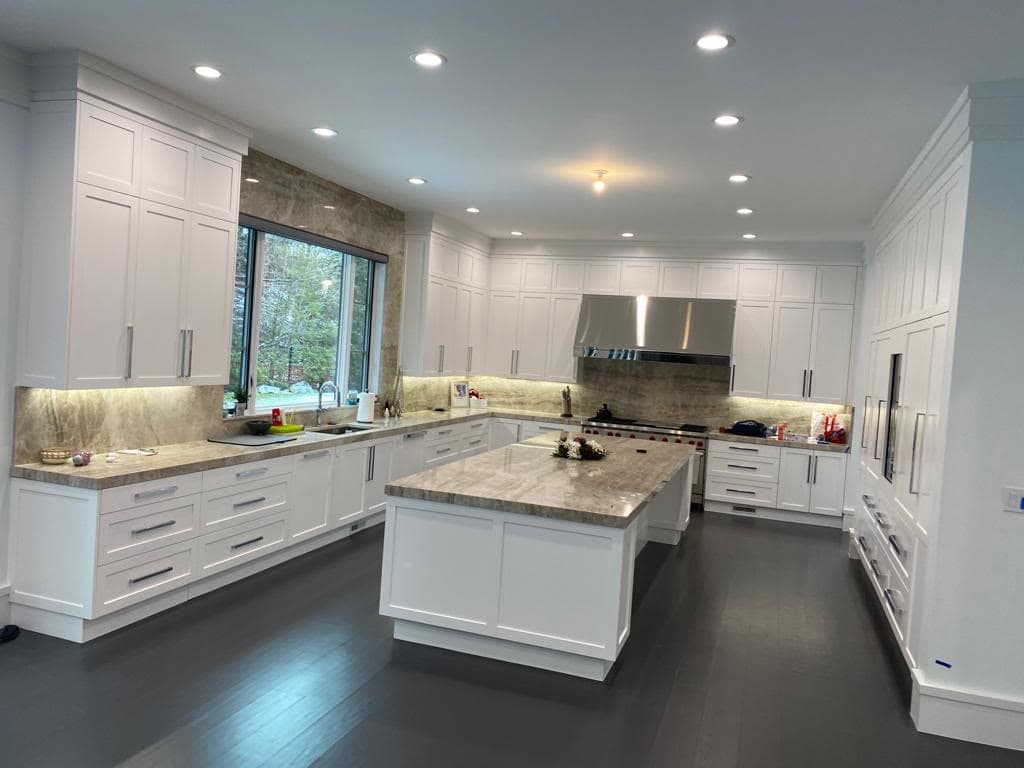
For cabinets and floors, decide whether you want contrast or blend. Light quartz brightens dark cabinets and small kitchens, while warm granite or soapstone grounds bright white cabinetry. Busy floors usually pair better with a calmer countertop, and busy stone tends to shine over simpler cabinets and floors. Carry an actual door sample and a floor photo when you view slabs.
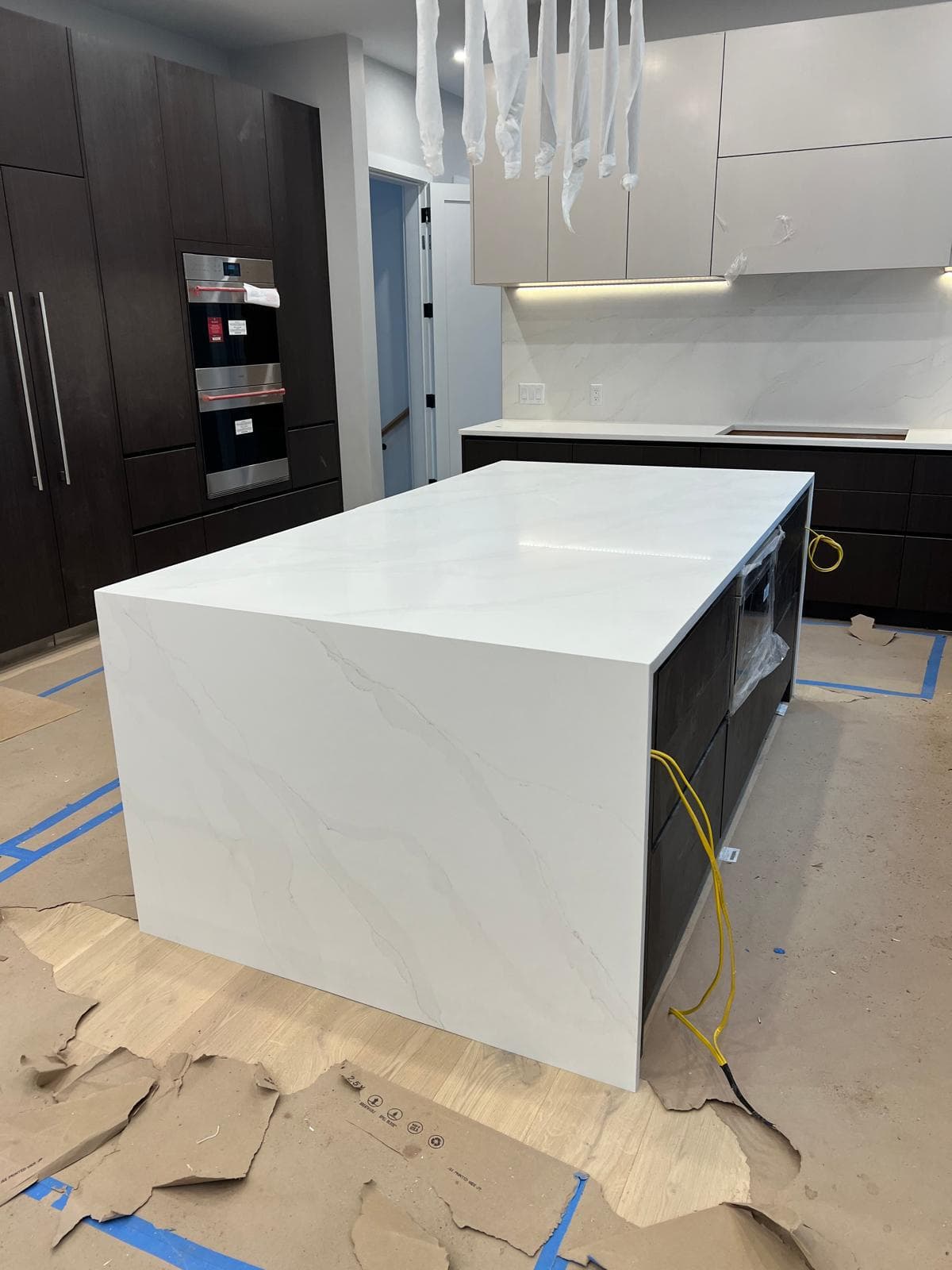
Edge profile and thickness set the overall vibe. A simple eased or straight edge feels modern and clean, while ogee or bullnose edges feel more traditional. Standard slab thickness is often around 3 cm for a solid, substantial look, with 2 cm also available and sometimes built up at the edge to look thicker. These small choices change both the feel and the final price.
See Full Slabs in Person and Vet Your Fabricator
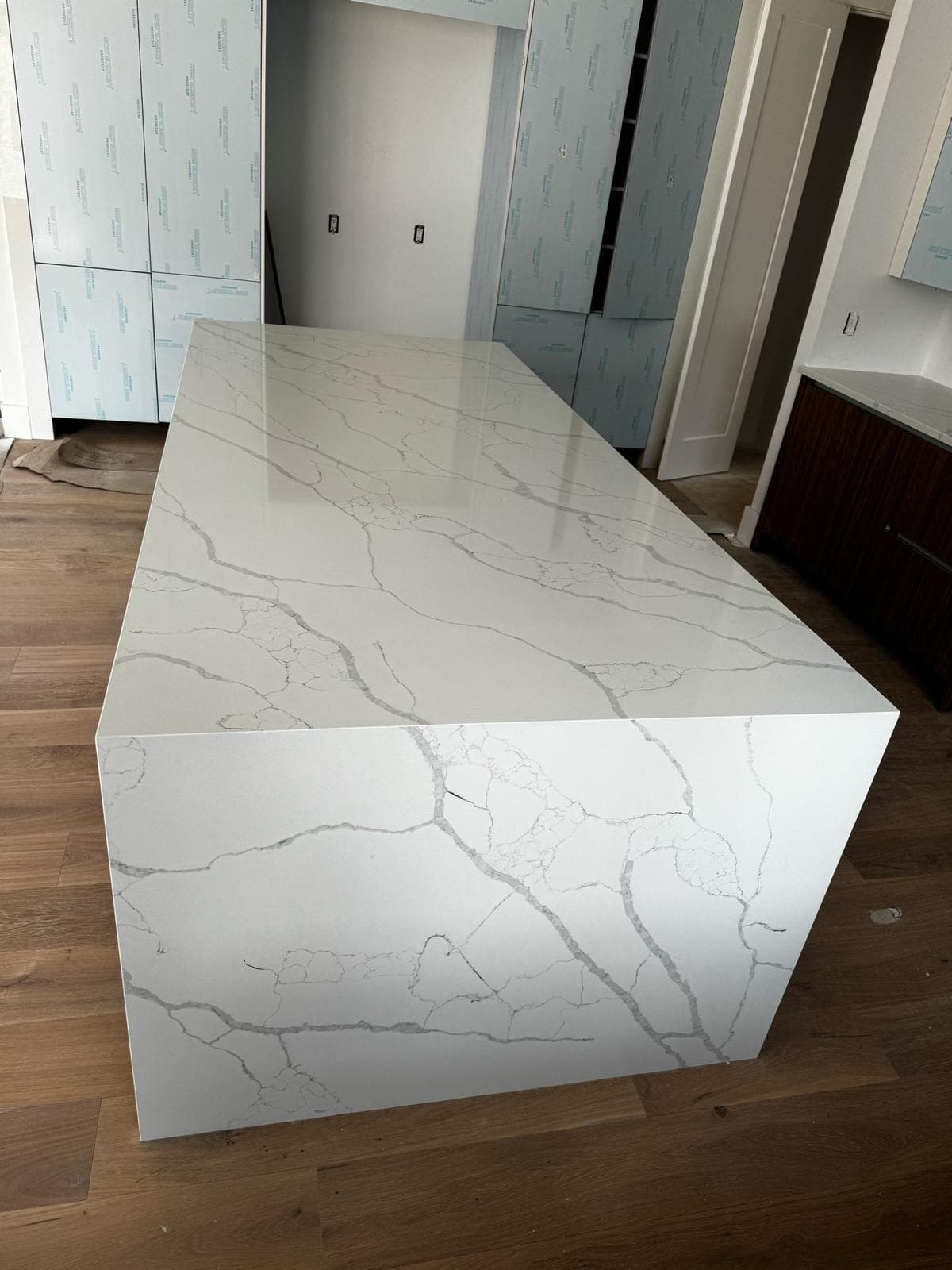
Never choose natural stone from a small chip or a website thumbnail. Granite, marble, and quartzite vary dramatically across a single slab, with movement, veining, and color shifts that a two-inch sample cannot show. Seeing the full slab lets you spot the exact areas that will land on your island or main run.
Your fabricator matters as much as the stone. Ask the right questions before you sign anything, and pay attention to how clearly they answer. A shop that fabricates in house and templates precisely gives you cleaner seams and a better fit.
- Do you fabricate in house, and do you use laser templating for accuracy?
- Can I see and approve the full slab before you cut it?
- How do you place and minimize seams for my layout?
- What is included in the quote: removal of the old top, sink cutouts, edge work, and installation?
- How long from template to install, and can it be done in a single day?
- Is sealing needed, and do you seal it before handoff?