What Quartz and Granite Actually Are
The confusion usually starts here, so let's clear it up. Granite is 100 percent natural stone. It gets quarried in big blocks, cut into slabs, then polished. Every slab is a one-of-a-kind piece of rock, which is why no two granite kitchens look exactly alike.
Quartz countertops are engineered. They are made from roughly 90 to 95 percent ground natural quartz mixed with resins and pigments, then pressed into slabs. The result is a hard, consistent surface that looks like stone but is manufactured to a spec. Brands you will hear around here include Cambria, Caesarstone, Silestone, and MSI.
So the real trade-off is natural stone (granite) versus engineered stone (quartz). Both are excellent kitchen surfaces. The right pick depends on how you cook, how much upkeep you want, and the look you are after.
Durability, Heat, and Scratches
Both materials are tough enough to last decades in a busy kitchen. The differences show up at the edges.
Granite handles heat exceptionally well. You can set a hot pan straight from the stove onto a granite counter and it will not scorch or discolor. That said, we still recommend trivets, because sudden temperature swings can stress any stone over time.
Quartz is where homeowners get caught off guard. Because quartz is bound with resin, direct high heat can scorch, yellow, or leave a permanent mark. A pot straight off the burner can ruin it. Always use a trivet or hot pad on quartz. No exceptions.
On scratch resistance, quartz is slightly harder and more forgiving day to day, though both surfaces will dull a knife long before the knife hurts them. Use a cutting board on either one and you are fine.
- Heat: granite wins, quartz needs trivets always
- Scratches: quartz slightly harder, both very resistant
- Chips: both can chip at edges from a hard direct impact
- Lifespan: 25-plus years for either with normal care
Sealing, Maintenance, and Stains
This is the category that convinces a lot of Worcester homeowners to go one way or the other.
Granite is porous, so it needs to be sealed. Most granite gets sealed at install and then resealed periodically, often once a year, depending on the stone and how hard the kitchen gets used. A quick test: drip a little water on the counter and see if it beads up (good seal) or darkens the stone (time to reseal). Unsealed or worn granite can absorb oil, wine, and coffee and hold a stain.
Quartz is non-porous and never needs sealing. Ever. That is its headline feature. Because nothing soaks in, quartz shrugs off wine, coffee, juice, and oil far better than most natural stone. Day-to-day cleanup on both is simple: warm water, mild dish soap, a soft cloth. Skip harsh or abrasive cleaners on either surface.
Looks: Natural Variation vs. Engineered Consistency
This one comes down to taste, and honestly it is the reason to see slabs in person before you commit.
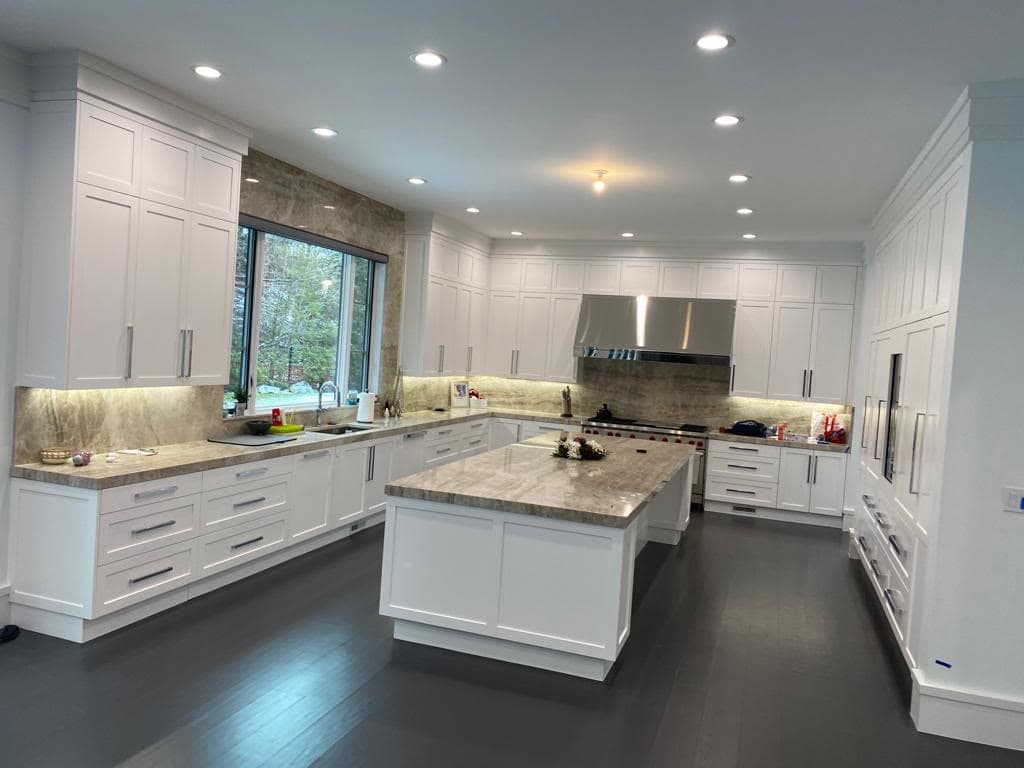
Granite gives you movement, depth, and one-of-a-kind character: veins, flecks, and color shifts that no factory can copy. If you want a counter that feels like a natural focal point and no neighbor has the same one, granite delivers. The flip side is that the slab you fall in love with in the yard is the slab you get, so seam placement and layout matter.
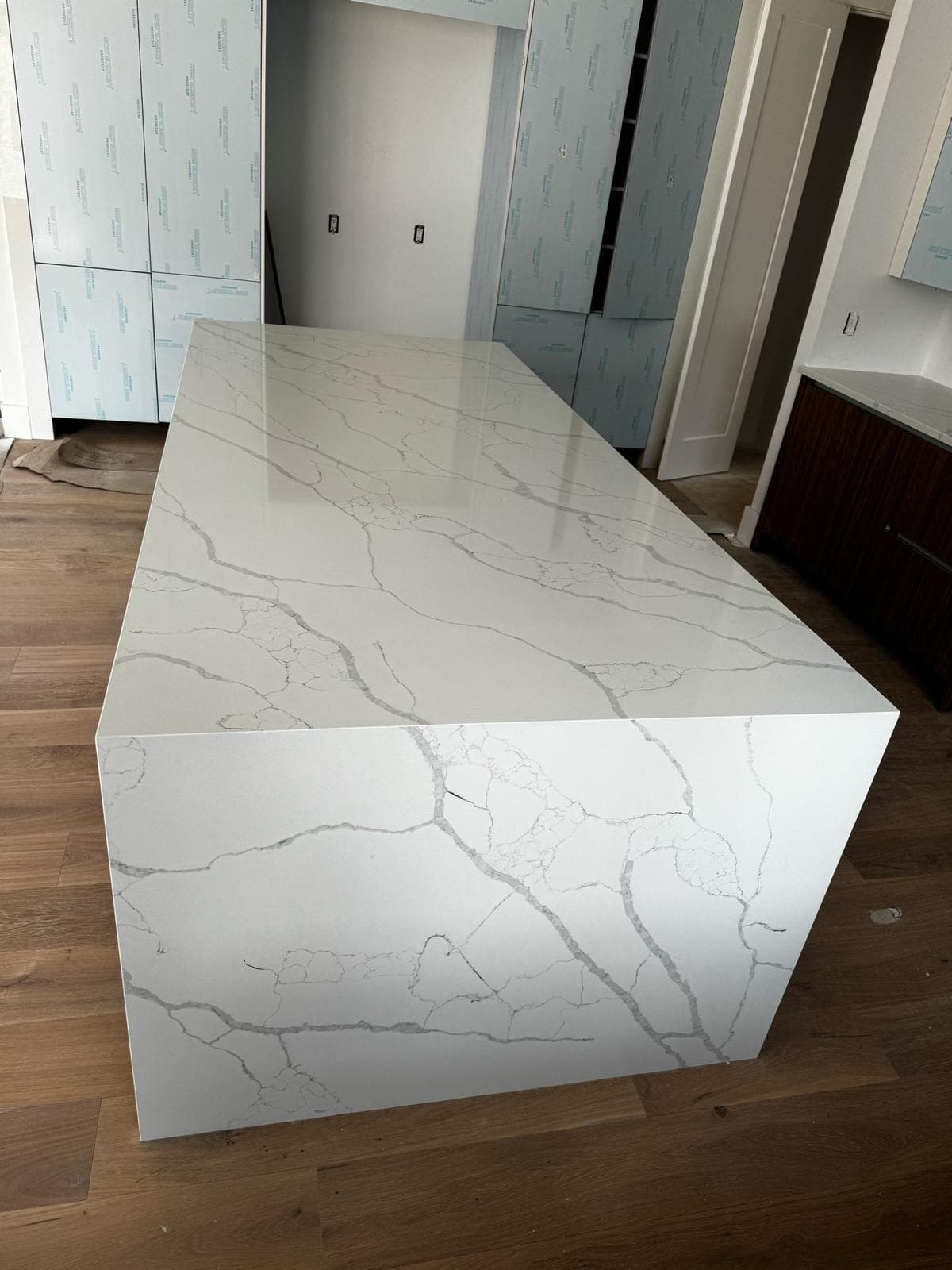
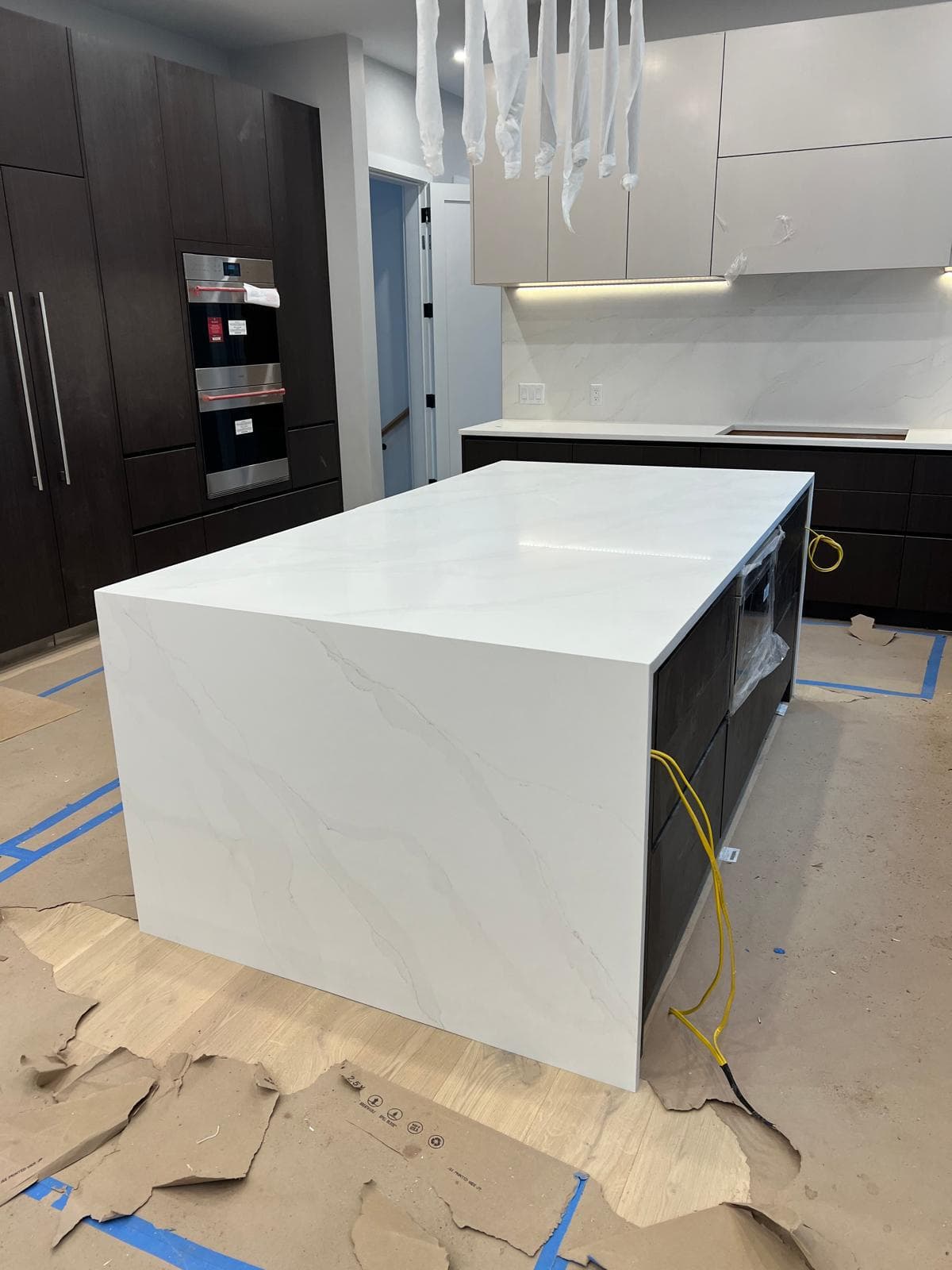
Quartz gives you consistency and control. The pattern is predictable across the whole slab, so what you see in the sample is very close to what lands in your kitchen. That makes quartz a strong match for clean, modern kitchens and for anyone who wants a specific uniform look, including bright whites and soft grays that are hard to find in natural stone. Today's quartz also does convincing marble-look veining without marble's fragility.
Price, Resale, and Which One Fits You
Both sit in the same general neighborhood on price, and it depends heavily on the color, thickness, and edge you choose. As a rough guide, installed countertops in this market tend to run somewhere in the range of about $40 to $140 per square foot, with entry-level granite often at the lower end and premium designer quartz or exotic granite reaching the top. Your final number depends on square footage, slab selection, edge profile, and cutouts, which is exactly what a free in-home estimate pins down.
On resale, both are considered premium upgrades that buyers in Massachusetts recognize and want. Swapping tired laminate for either granite or quartz reads as a real kitchen upgrade to appraisers and buyers alike. Neither one is a wrong answer for value.
So who should pick what? Choose granite if you love natural, one-of-a-kind stone, you cook with hot pans a lot, and you do not mind resealing once in a while. Choose quartz if you want zero sealing, maximum stain resistance, and a consistent look, and you are disciplined about always using a trivet.
- Pick granite for: natural character, high heat tolerance, unique slabs
- Pick quartz for: no sealing, best stain resistance, uniform modern look
- Both: premium resale value, 25-plus year lifespan, easy daily cleaning
See the Slabs Before You Decide
Here is the honest truth after years of fabricating and installing both: there is no universal winner. Granite and quartz are both outstanding countertops, and the best choice is the one that fits how your household actually lives and cooks.
The mistake we see most is homeowners choosing from a tiny sample chip or a phone screen. A two-inch square cannot show you how granite's veining flows across a full island, or how a quartz pattern reads in your light. Seeing full slabs in person changes decisions all the time.
At Havenstone Granite in Worcester, we fabricate in house, use laser templating for a precise fit, and can often complete installation in a single day. We will walk you through granite and quartz side by side, help you weigh the trade-offs for your kitchen, and give you a real number. Call us at (774) 823-0961 for a free in-home estimate. We serve Worcester and communities across Massachusetts and New England, and we are happy to help in English or Portuguese.