Warm, Natural Veining Is Replacing Stark White
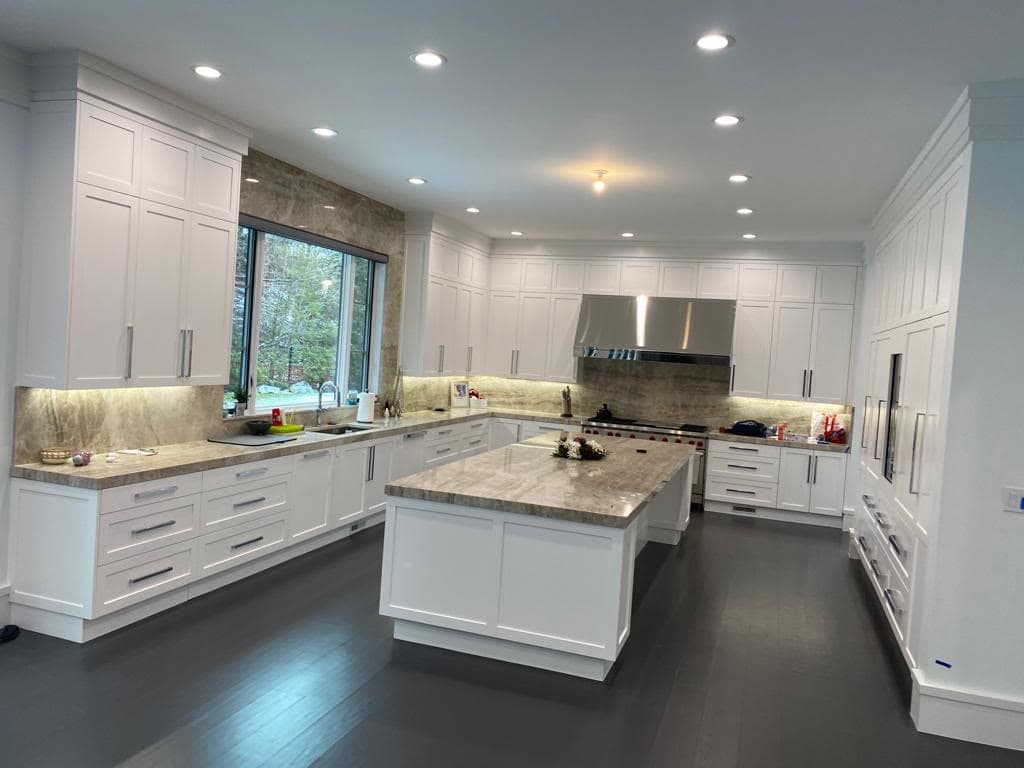
For a few years, bright white countertops with thin gray veins were the safe default in almost every kitchen. Heading into 2026, homeowners in Worcester and across New England are asking for something warmer and more natural. Think creamy backgrounds, soft taupe undertones, and veining that looks like it came out of the earth rather than off a printer.
This shift is partly a reaction to how common the cool white look became. When everyone has the same slab, it stops feeling special. Warmer stone reads as more inviting, hides everyday crumbs and coffee rings a little better, and pairs well with the wood tones and softer cabinet colors that are also trending.
The practical takeaway: if you love a bright, clean kitchen, you do not have to abandon light stone. You can keep things light while choosing a slab with warmth and real movement, so the room feels current without chasing a look that will date quickly.
Quartzite Statement Islands and Waterfall Edges
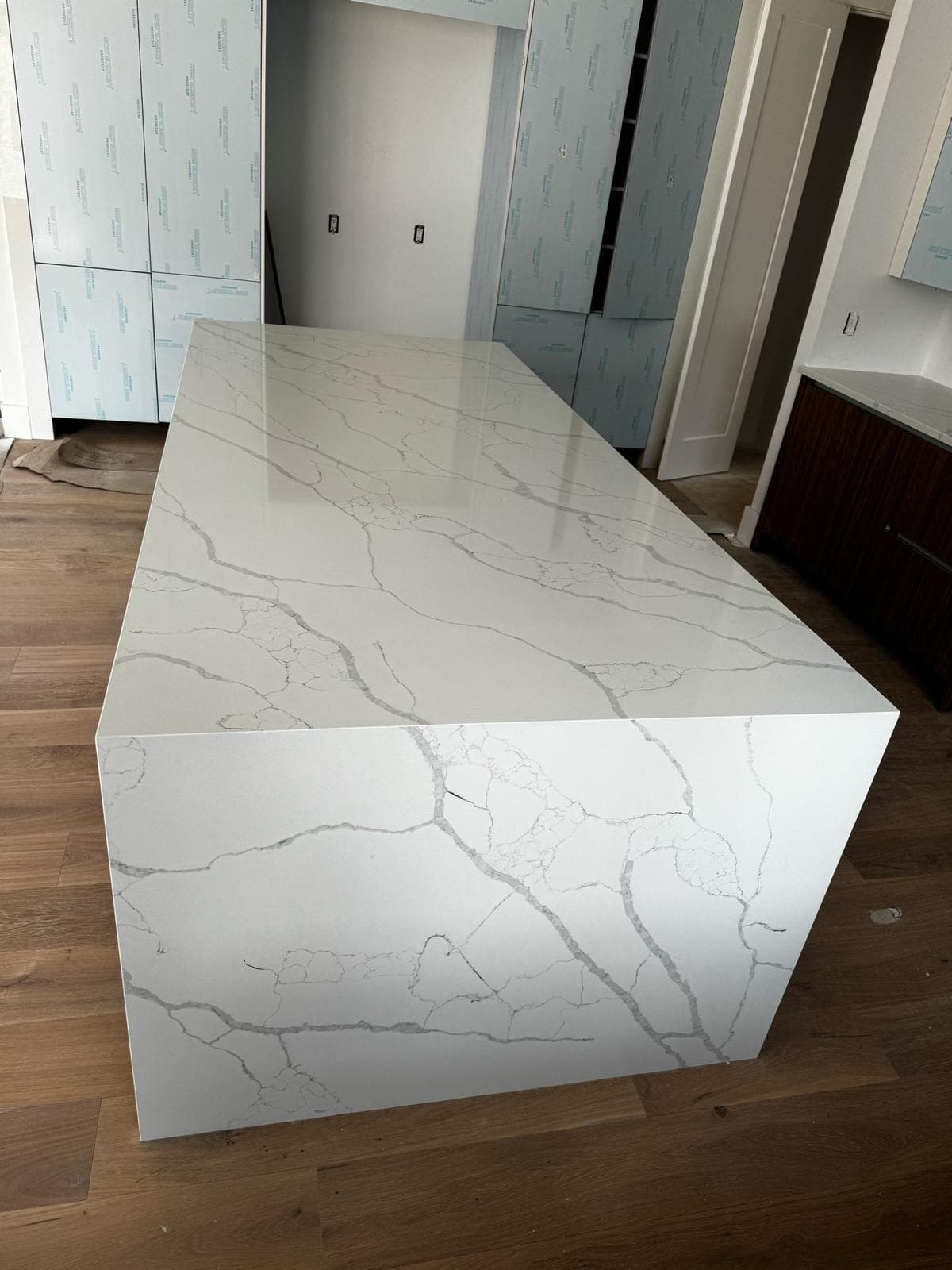
The kitchen island has become the place people are willing to spend on drama. In 2026 that often means a bold quartzite slab with sweeping veins as the centerpiece, while the perimeter counters stay quieter. Quartzite is a natural stone prized for its hard surface and striking patterns, which makes it a favorite for a piece meant to draw the eye.
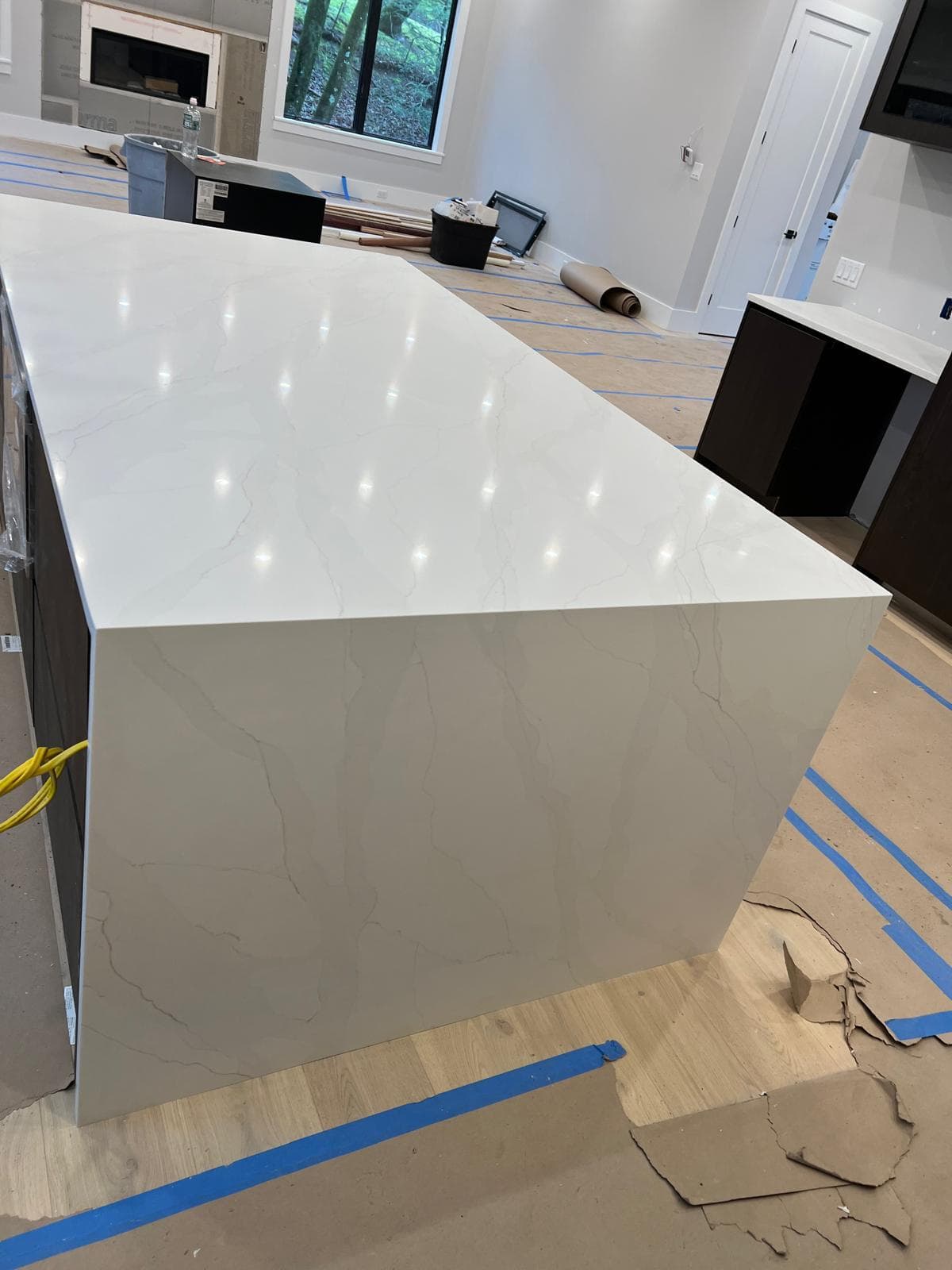
Waterfall edges, where the stone runs vertically down the sides of the island to the floor, remain a strong request. They show off the slab's pattern and give the island a solid, furniture-like presence. Because the veining has to line up as it turns the corner, a waterfall edge depends heavily on careful slab layout and fabrication, which is where an in-house shop earns its keep.
A statement island is a bigger investment, so it is worth choosing a pattern you genuinely love rather than one that is simply on trend this year. Seeing the full slab in person, not just a small sample, is the best way to know how the movement will read across your island.
Full-Height Backsplashes and Mixed Materials
Instead of a short backsplash topped with tile, more homeowners want the same stone running from the counter all the way up to the underside of the upper cabinets or the hood. A full-height stone backsplash creates a clean, seamless wall that highlights the veining and skips grout lines that collect grime over time.
At the same time, mixing materials is having a moment. A common approach is one stone on the island and a different, more understated surface on the perimeter. For example, a dramatic natural stone island paired with a durable, low-maintenance quartz around the rest of the kitchen. This lets you get the wow factor where it counts and easy upkeep where you actually do the cooking.
- Full-height backsplash in the same stone for a seamless, easy-to-clean wall
- A bold island stone paired with a calmer perimeter surface
- Quartz on hardworking prep zones, natural stone where looks matter most
- Coordinating veining direction so the pieces feel intentional, not random
Honed and Leathered Finishes Over High Gloss
Finish is quietly one of the biggest trends of 2026. Polished, high-gloss stone still has its place, but honed (matte) and leathered (soft-textured) finishes are growing fast because they feel more organic and modern. A honed surface has a smooth, low-sheen look, while a leathered finish adds a subtle texture you can feel with your hand.
Beyond looks, these finishes tend to hide fingerprints, smudges, and minor scratches better than a mirror-like polish, which is a real advantage in a busy family kitchen. On darker stones especially, honed and leathered options soften the surface and cut down on glare.
Keep in mind that different finishes can change how a stone absorbs liquids, so sealing needs vary. It is worth asking how a specific slab and finish should be cared for before you commit, rather than assuming all finishes behave the same.
Soft Earthy Tones and Thicker, Detailed Edges
Color direction in 2026 leans earthy and grounded. Warm greiges, soft greens, gentle browns, and muted charcoals are showing up in both cabinets and countertops. These tones work well with natural stone and help a kitchen feel calm and lived-in rather than clinical.
Edges are getting more attention too. Thicker profiles and mitered edges, where two pieces of stone are joined to make the counter look like one solid, chunky slab, add a substantial, high-end feel. Detailed edges do add fabrication work, so they influence cost, but they can make even a modest stone look custom.
How to Choose What Actually Lasts
Trends are useful for narrowing options, but the smartest move is to buy what you will still love in ten years. Kitchens are expensive to redo, so a countertop that flatters your home and fits how you cook will always beat a look chosen only because it is popular right now.
A helpful filter: start with the practical stuff, then layer style on top. How much maintenance are you willing to do? How hard is the surface on your daily routine? Which colors already live in your cabinets, floors, and walls? Answer those first, and the trend choices tend to sort themselves out.
Installed countertops in this area generally range from roughly $40 to $140 per square foot depending on the material, finish, edge detail, and layout, so it pays to compare options before deciding. The best way to make the call is to see full slabs in person and get real numbers for your space. Havenstone Granite offers free in-home estimates across Massachusetts and New England, with in-house fabrication, laser templating, and single-day installation. Call (774) 823-0961 to look at slabs and price out the look you want.