What Quartzite Actually Is
Quartzite is a natural metamorphic stone. It starts as sandstone rich in quartz, then heat and pressure deep in the earth fuse those grains into a dense, hard slab. That geological process is what gives quartzite its strength and its flowing, layered patterns.
People confuse quartzite with quartz constantly, and the names do not help. They are different materials. Quartzite comes out of the ground as a solid slab and gets cut to size. It is one of the harder natural stones used for countertops, typically rated harder than granite on the Mohs scale, which is why it resists scratching so well.
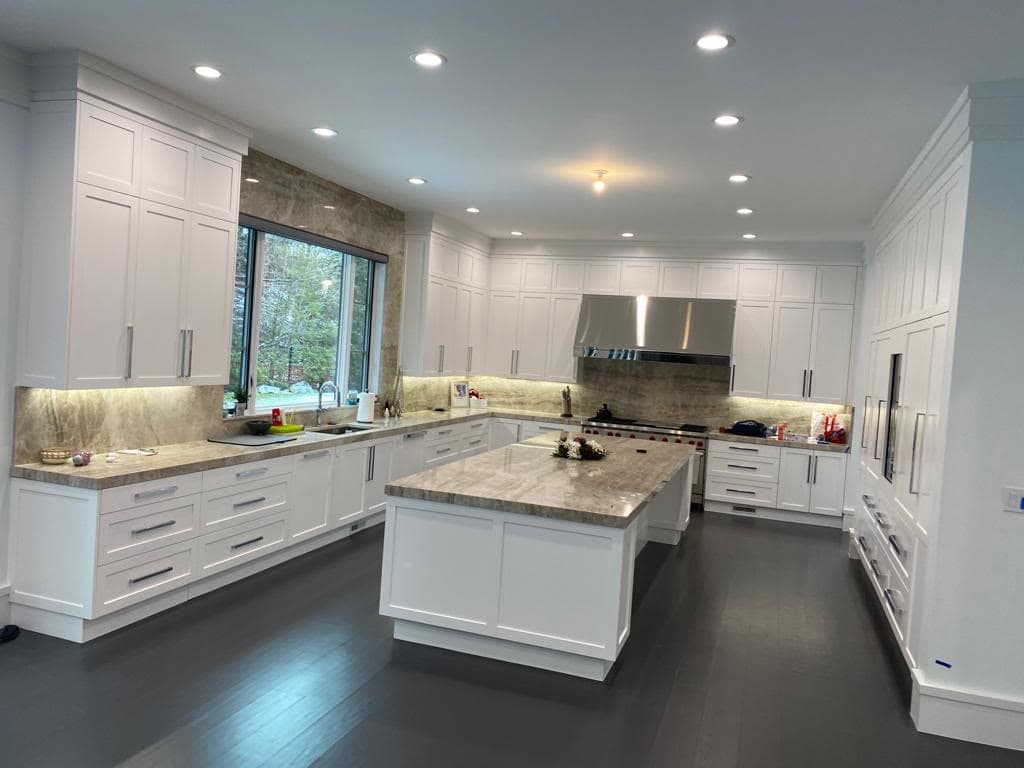
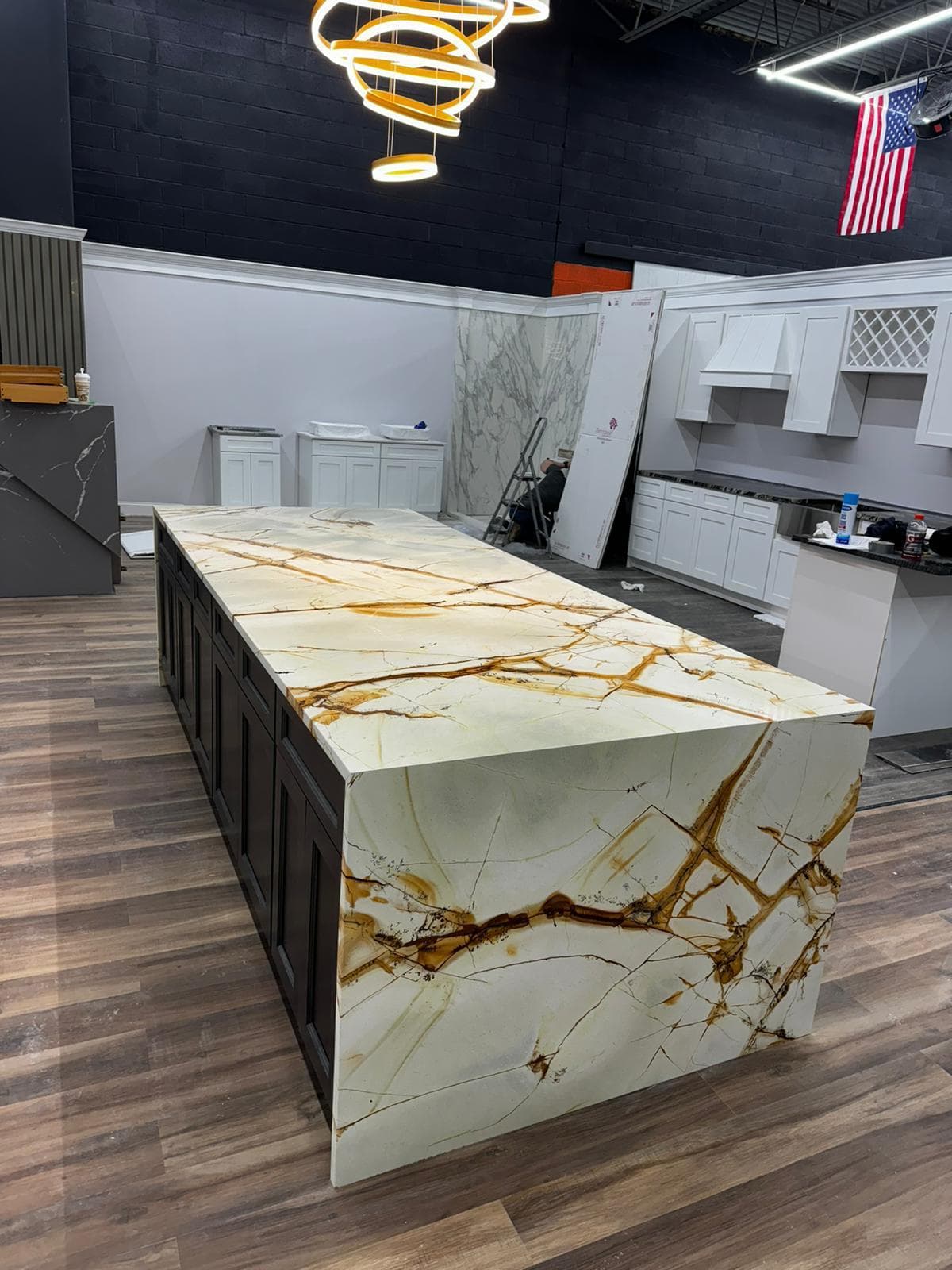
Because it is quarried, no two slabs are identical. The veining, movement, and color shifts are formed by nature, so the piece you pick is the piece you get. That is a selling point for anyone who wants a one-of-a-kind surface rather than a repeating manufactured pattern.
Quartzite vs. Quartz vs. Marble
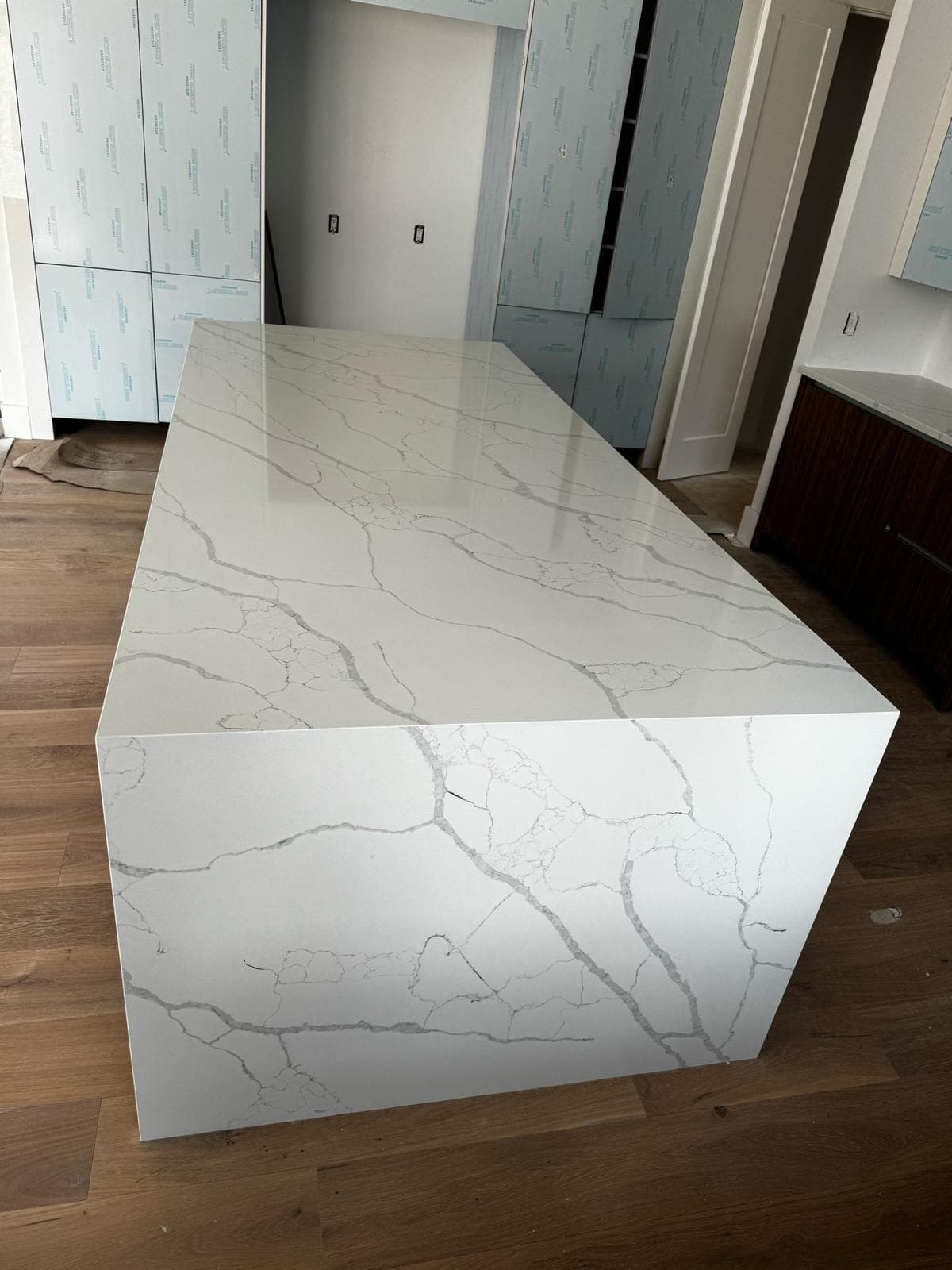
Quartz (the countertop kind, sometimes called engineered stone) is manufactured. It blends ground natural quartz with resins and pigments, then presses and cures the mix into slabs. Because it is engineered, quartz is non-porous, does not need sealing, and comes in highly consistent colors and patterns.
Marble is also natural, but it is a softer stone. It is prized for its classic look, yet it scratches and etches more easily than quartzite and calls for more careful upkeep in a busy kitchen.
Quartzite sits in an appealing middle ground. It gives you a genuine natural stone with dramatic, marble-like veining, but with hardness and scratch resistance that generally beat both marble and granite. The tradeoff is that, unlike quartz, it is a natural porous stone, so it needs to be sealed.
- Quartzite: natural metamorphic stone, very hard, porous, needs periodic sealing, marble-like looks
- Quartz: engineered stone (quartz plus resin), non-porous, no sealing, very consistent patterns
- Marble: natural stone, softer, etches and scratches more easily, classic veined look
The Marble Look, Built Tougher
The biggest reason homeowners choose quartzite is the look. Many quartzites carry the soft white-and-gray veining people love in marble, along with dramatic blues, greens, and warm neutrals you will not find in most engineered slabs.
The difference is what happens under daily use. Where marble can scratch from a dragged pan or dull from an acidic spill, a true quartzite holds up far better to knives, hot cookware, and traffic. For a family kitchen that wants the marble aesthetic without babying the counter, quartzite is often the answer.
It is the kind of surface that reads as high end at a glance and still handles real cooking, prep, and cleanup.
Durability, Heat, and Scratch Resistance
Quartzite is a strong performer. Its hardness makes it very resistant to scratching, so everyday knife slips and moved cookware are unlikely to leave marks. As a natural stone, it also tolerates heat well, and a briefly set hot pan will not melt or scorch it the way resin-based surfaces can be affected. Even so, we always recommend trivets and cutting boards to protect any countertop and keep it looking its best.
One honest caveat: not every slab sold as quartzite is the same. Some softer stones get labeled quartzite in the market but behave more like marble, meaning they can etch slightly when they meet acidic foods such as lemon, vinegar, or wine. True, fully metamorphosed quartzite is far more resistant to etching. The practical takeaway is to know exactly what you are buying, which is easier when you see the actual slab and talk it through with a fabricator.
Sealing and Everyday Care
Quartzite is porous, so it should be sealed. Sealing fills the microscopic pores and helps the stone resist staining from oil, wine, and other spills. Most quartzite gets sealed at installation and then resealed periodically, with the exact frequency depending on the specific stone, its finish, and how hard the kitchen gets used.
A simple test tells you when it is time: drop a little water on the surface and watch it. If the water beads up, the seal is working. If it soaks in and darkens the stone, it is due for another coat.
Day to day, care is easy. Wipe spills promptly, clean with mild soap and water or a stone-safe cleaner, and skip harsh or acidic cleaners that can wear down the sealer over time. That routine keeps a quartzite counter performing for years.
Pricing, and Who Quartzite Suits
Quartzite is generally positioned as a premium natural stone, so it tends to land toward the higher end of the countertop range. Installed countertop pricing usually falls somewhere around $40 to $140 per square foot depending on the material, and quartzite commonly sits in the upper part of that spread. The final number depends on the specific slab, its rarity and color, thickness, edge profile, and the layout of your kitchen.
Quartzite suits homeowners who want authentic natural stone with a marble-inspired look and stronger everyday durability, and who do not mind periodic sealing as part of ownership. If you want zero maintenance and perfectly uniform color, engineered quartz may fit better. If dramatic natural veining and real-stone character matter most, quartzite is hard to beat.
The best way to decide is to see slabs in person, since color and movement vary so much from piece to piece. At Havenstone Granite in Worcester, MA, we fabricate in house, use laser templating for a precise fit, and offer free in-home estimates. Call us at (774) 823-0961 to view slabs and get your project priced.